
(Developed through Creative Writing for Social Research (CW 198) 1st Semester AY 2025-2026 with Marie Aubrey J. Villaceran, University of the Philippines Diliman submitted for the grade of INC)
“One cannot turn one’s back on the women or on the burden of memory they carry. If one values women as human beings, one will not turn one’s back on the women who are being hurt today and the women who will be hurt tomorrow.”
― Andrea Dworkin, Pornography: Men Possessing Women
INTRODUCTION: BUT WHY THO? [WARNING: LONG]
Pornography: stumbling into this problem is like stepping barefoot on a hill of ants at your family potluck in the backyard. At some point between noticing the creepy-crawly sensations and the pricking and frenzied rubbing off, it becomes clear that a mistake has been made: the underestimation of the kind of power it holds in relation to size. The power to inflict a specific kind of suffering, a subjectively unrelatable one that is considered laughable and brushed aside as small. Here, a soothing ointment, now stop crying. Really, why be such a killjoy at an event that is supposed to be fun? Without porn, as the Avenue Q song says, the internet would not have existed at all (Baker).
The Current Logic
To acknowledge that modern-day pornography is an intractable problem is a sobering first step toward change. But first, why the necessity for this change? Consider: is it not in a society’s best interest to care for its disabled? Disabled, that is, in the sense that individuals are no longer able to function in an optimal way neurologically, with their cognitive abilities impaired or dulled, their priorities irrationally arranged. The porn user or addict is regularly released into a field with a giant cornucopia: an attention economy of dopamine-rich pornographic stimuli, all fighting for his or her attention, which is a cognitive resource so easily manipulated by streams of viral and popular (especially if sexual in nature), yet mindless, usually inane content, though “[we] face attention’s scarcity every day; while “paying attention” to one thing we ignore others” (Berkeley Economic Review Staff). What are we really ignoring as our minds pay intangible units of attention to the wide breadth of unimportant and non-urgent stimuli, and for what reasons do we stay attached and dependent to them?
“Attention economy” is a term coined by economist, psychologist, and Nobel Laureate Herbert A. Simon, who said that “attention [is] the “bottleneck of human thought” that limits both what we can perceive in stimulating environments and what we can do.” Moreover, he posited that “a wealth of information creates a poverty of attention,” and “multitasking is a myth” (Berkeley Economic Review Staff). It is the limited nature of our attention spans that makes us valuable to various profit-seeking entities, individual or corporate, who know this fact all too well as they compete for its maximum exclusivity. A woman, for instance, who does not really want to make her partner buy a product, but to keep his attention off porn in order to prioritize their relationship’s intimacy, will be hard-pressed to find that she cannot stop him, despite her repeated pleas and concerns, despite her compromise and attempts to beautify herself. He is ignoring her, his real partner, for mindless, one-sided sex with porn.
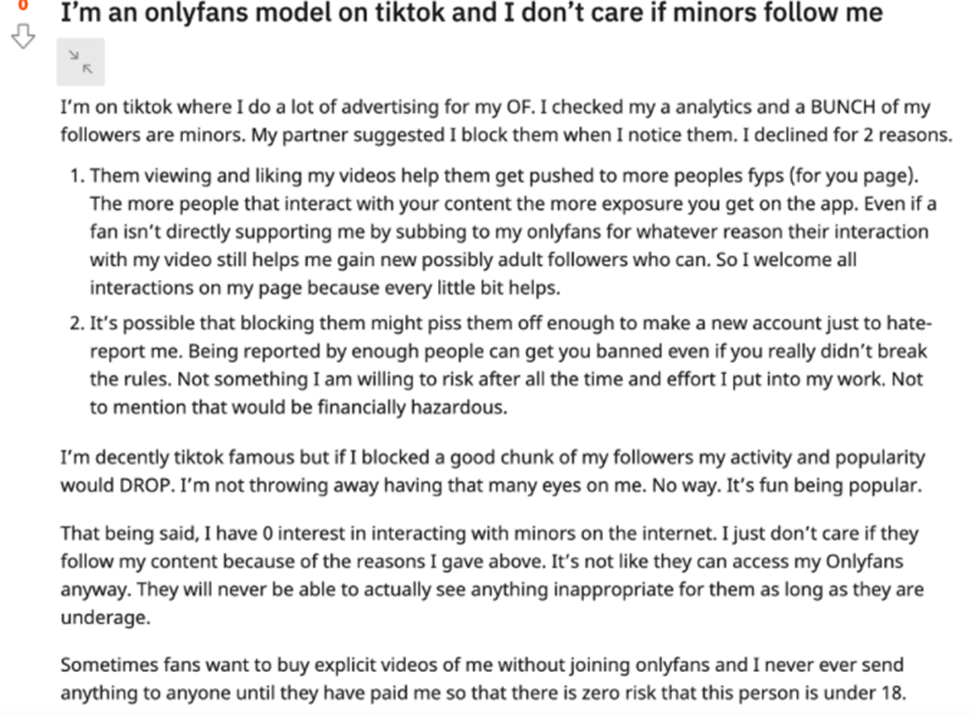
Meanwhile, the pornographic menu grows exponentially away from reality. Deepfake porn videos of your favorite actress who has not consented to her face being transplanted onto pornstars’ bodies to mimic an uncanny likeness. TikTok “thirst traps” of women vying for likes by dancing like strippers, taking advantage of filters, lighting, angles, and their audience’s eager, communally sanctioned readiness, on an app that supposedly prohibits sexual content. Actual strippers on TikTok advertising their OnlyFans, “getting the bag,” and actually thinking that exposing themselves to minors is okay because it helps their exposure. Women who post nudes for attention and who get a kick out of telling men they interact with to ignore their wives and think of them instead. Deviant avenues like subreddits where women encourage men to participate in “neglect your wife” challenges. Feminist critics who support sex work by spreading pseudo-empathetic messages and misinformation that criticize bills that seek to put controls in place to prevent exploitation and trafficking, the dissemination of child porn and revenge porn, and abuse of porn sites (Valens qtd. in Cox), that these identity verification requirements, measures required by the bill for adult performers on various websites, “do not solve online sexual exploitation,” as if its flaws cancel out all the good it would contribute toward ending sexual exploitation, as if online sexual exploitation is not effectively inherent in the nature of their “work” that promotes addiction to a product that is often produced under the influence of drugs, coercion, duress, and desperation. It would not be unreasonable to see pornography as a drug, and its manufacturers, drug peddlers, predators who prey on human weakness and libido for profit. A drug that predictably lobbies for itself and its ability for virulence and widespread acceptance.
A normative statement like, “that is evil,” is bound to get heckles (or silent agreement: eh, what can you do about it?). And yet encounters with actual evil are met with excitement and encouragement. These sex workers on various social media websites, apps, and porn websites have the lion’s share of the scarce, limited attention of women’s partners everywhere, and they cannot see how it is wrong, nor do they really care if they do see the damage inflicted. It is a travesty unfolding in plain sight. The other pertinent questions, not necessarily practical: how has the world swallowed this cultural message; how did we get here; and most importantly, how, if (at all) possible, can we get out?
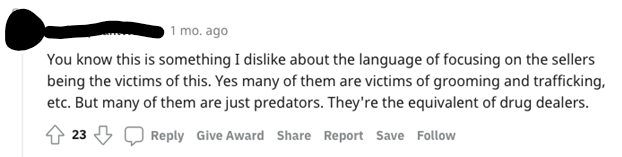
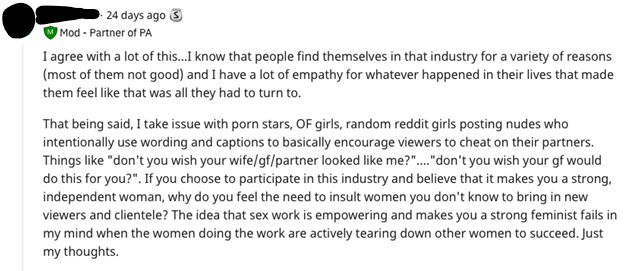
In a response to a Reddit post (Anonymous Poster 1) that calls for the accountability of women or sex workers who go into porn, user Anonymous Poster 2, a moderator of the Love After Porn subreddit and “Partner of a PA” (porn addict) outlines this encouragement of evil immorality, a powerful enemy hiding behind the shield of protection of fourth wave feminism, or, at the risk of oversimplification, the “girl boss” female empowerment brand of feminism that seeks profit at all costs.
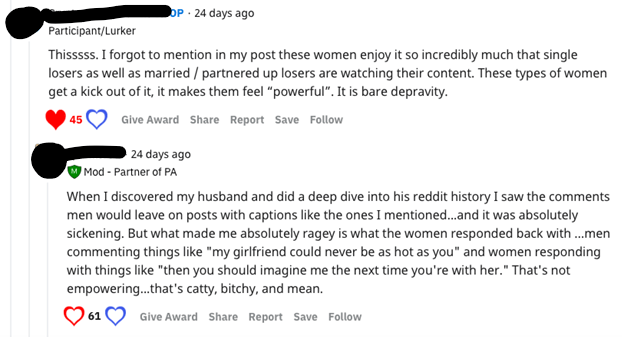
Fig. 1. Anonymous Poster 1 and 2. Mar. 2022, Reddit. Accessed 8 Apr. 2022.
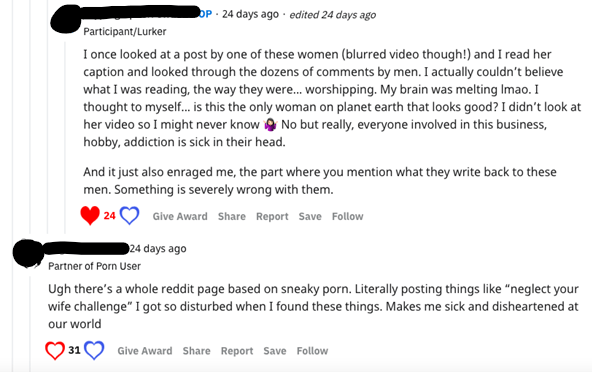
Fig. 2. Anonymous Poster 3 and 4. Mar. 2022, Reddit. Accessed 8 Apr. 2022.
Pornography as a Superstimulus
Nobel Prize-winning ethologist, Nikko Tinbergen, defines a supernormal stimulus as a stimulus that “evokes a much larger response than one that has evolutionary significance” (Gottman). A supernormal stimulus causes decreased interest in normal stimuli. In his “Open Letter to Porn,” Dr. Gottman includes Tinbergen’s study of male stickleback fish, territorial creatures who fight male rivals during mating season. In an experiment, an object with a redder-than-normal belly, more saturated than the natural color found in the fish, is placed within the vicinity of the sticklebacks. They attacked the fake fish and stopped pursuing their real male rivals. What provoked the reaction was not the normal stimulus anymore, but the supernormal.
Porn actors, people who promote and distribute their sensual/sexual media and themselves as products to be consumed by the viewer, can be conceived as both drug peddlers and drugs. Internet porn, which is huge leaps above nude magazines like Playboy, offers an unprecedented amount of addiction-forming potential because of its endless novelty, or the ability for a user to click on one image to another (Free Medical Education). While magazines offer variety, it is important to note that moving pictures like films are effortless in that they are in-your-face depictions, as opposed to static pictures that make use of the viewer’s imagination, the use of which requires more effort (barrier to entry), though people who exchange money for porn on websites such as OnlyFans or camming sites despite the abundance of free content do so because of reasons like: exclusivity or the “personal touch,” the feeling that something is done for you, customized videos for specific or uncommon fetishes, or to support their favorite pornstar (Deleted Reddit User et al.).
In the educational animated video series, “Your Brain on Porn,” by the FreeMedEducation YouTube channel, it is shown that porn can also escalate quickly to more kinky or shocking material, and one does not need to have an addictive personality or genetic predisposition to addiction to be hooked. Porn, as it is presented in the series, is a superstimulus that overrides normal restraint and keeps the user coming back for more. Moreover, the brain, as it is now, not much different from our ancestors’, was not built for porn. As one survives through caloric intake, the primitive brain binges on highly addictive substances like high-calorie junk food, because these high-calorie sources were relatively scarce before modernity. This behavior, reinforced again and again, leads to overconsumption. It is the same with the reproductive drive to make babies, a primary evolutionary priority. In the past, there was less variety in potential mates, but now, it is possible to find and “copulate” with more attractive people in one session of porn viewing than in our ancestors’ lifetimes, and unlike junk food, one can never be satiated.
It is clear that the brain has not evolved to handle heavy porn use. Porn is so stimulating because it takes advantage of a primitive subconscious program: the Coolidge effect (Free Medical Education). A rat experiment was conducted: the pairing of a male rat with a female rat. It was found that after the male rat mated with the female rat, the male then got tired with the female, however, when presented with a new female, the rat was invigorated once again and mated with the new female, going through an endless cycle of copulating with a new female again and again until it was exhausted. The Coolidge effect is a mammalian genetic program whose purpose is to increase genetic diversity or variety of male offspring, leading to questions of nature versus nurture; free will and agency versus systemic problems and phenomena; and the line between morality and amorality.
Another study was done with rams, measuring the time to ejaculation against female presentation. When presented with the same female to copulate with over and over again, the time to ejaculation gradually increased until it took eighteen minutes. A ram lives for twelve years, and eighteen minutes is equivalent to two hours in human time, hence, it would be practical to bring in a new female each time to efficiently produce offspring. When presented with new females, the rams ejaculated quickly because they were more excited. The Coolidge effect, then, can be thought of as a declined interest in the present sexual partner and renewed sexual interest in a new sexual partner (Free Medical Education). However, what is currently happening to society right now is that this declined interest in a partner they have in reality is actually because of renewed sexual interest in a new virtual sexual partner, spurred on by male behaviors encouraged by the social acceptability of porn use and the addictive superstimulus that is porn itself.
The awareness that there is an available sexual partner just a Google search away is enough; most who use porn today have been doing so since their teens, and this constant consciousness (or subconsciousness) of availability, with low barrier to entry, means that anyone who desires an exclusive and fulfilling sexual relationship today is faced with an impossible standard. Knowing that it takes more effort to keep an actual sexual relationship exciting even as partners work against the Coolidge effect, coupled with the knowledge that there is a no-effort, but more exciting (novelty, the ability to see more specific or unusual visual angles), more satisfying (fulfilling exact physical preferences, positions, fetishes), and more addicting option (more motivation to use repeatedly, leading to reinforced behavior) means that exclusive sexual relationships in the “real world” are in deep trouble, especially as pornographic material becomes less “on screen” and more “real world”; it is projected that virtual reality (VR) porn will be a $1 billion business by the year 2025 (“The Most up-to-Date Pornography Statistics”). Is it possible that as a society, we have now become the stickleback fish, who are in a great far-reaching experiment, where superstimuli like porn are designed and produced by economic demand, an eager labor force (low barrier to entry and high reward), and technological advances leading to our ruin?
Another experiment was done with monkeys in which they were given fruit juice (Free Medical Education). The monkeys paid to see female monkey bottoms with fruit juice, essentially giving up a valuable resource for porn. The reward circuity, or the reward center, connects the brain’s cerebral cortex (the part that controls planning, thinking, and morality) to the limbic system, the part that governs emotions such as fear, joy, anger, and most of our desires, drives, hunger, mate selection, and sexual urges. Dopamine represents the wanting or the drive, which makes us pursue things like orgasm, which feels good because of the opiates discharged during sexual release. Dopamine release is the chemical of motivation and reward. In the reward circuit, dopamine surges override feelings of fullness or satiety.
This is the frightening biochemical reality of the Coolidge effect: dopamine released with the same partner gradually decreases with time. This fact becomes especially worse when one considers how much porn people produce and consume—thirty-seven new porn videos are being produced daily in the United States; 28,000 people are watching porn at any given moment; approximately $3,000 is spent on pornographic material every second; 35% of all downloads on the internet are porn-related (“The Most Recent Porn Facts and Statistics (Updated 2021)”)—effectively tanking their interest in real-world partners. One clicks on new porn videos to get more dopamine surges, because dopamine is behind sexual desire as well as addiction. It not only changes behavior, but also changes the brain by abnormally raising levels of dopamine in response to anticipation of certain triggers, essentially paling other realistic or normal sources of joy. Addiction, then, is wanting something more but liking it less and less (one chases after a specific dopamine source and gets less of it gradually over time), leading to more shocking and kinky material (Free Medical Education).
In another study done on rats, a lever was designed to send a jolt of electricity to the rat’s reward circuit. The rat predictably hit the lever once it realized its novel control over the pleasure center of its brain, and kept hitting it and not stopping to eat, sleep, or have sex, a thousand times in an hour until it dropped dead (Free Medical Education). Dr. John Gottman, one half of The Gottman Institute along with his wife Dr. Julie Gottman, pursues knowledge through research and practice in relationships and sexuality. In his “Open Letter to Porn” in 2016, he has corrected his former recommendation of porn use to increase intimacy for couples who were struggling with intimacy after the birth of a child; now, he stands by research that confirms porn is indeed destructive to intimacy (Marshall). Scientists study rat behavior to seek ways of understanding and solving human behaviors, and these human behaviors are reflected in their experiments. Dr. Gottman states that when porn use is regular, a person actually turns away from intimate interaction. Like the rat with the lever, a porn user not only is in complete control of the sexual experience, as opposed to sharing it with a partner, but they are also operating off an unrealistic set of expectations: that sex will be under only one person’s control, and that their partner will always be immediately ready for it (like a pleasure lever).
The same experiment was done with an electric grid placed between the rat and the lever, the grid sending painful shocks to its paws. The rat crossed the grid to hit the lever, but it did not do the same with food as the reward. If one took the rat’s dopamine artificially, it would stop eating and starve to death, but would still like food yet have no motivation to get it, showing how the right level of dopamine is needed to function normally, with something as superstimulating as porn bound to wreak havoc on our baseline or optimal dopamine levels. As humans, the drive to reproduce is more salient to our genetic programming than acquiring money, food, and resources, which are things that are acquired and labored for in the pursuit of reproductive success, and porn’s instant sexually-arousing qualities and virtually direct current to our reward circuitry cause negative consequences like neglect of other things, anxiety disorders, and sexual dysfunction.
The desire to cut down on porn use is stemmed by unsuccessful attempts. Substance addictions, moreover, are different from behavioral addictions (Free Medical Education). Natural reinforcers are any activity that raises dopamine or causes dopamine release, with the reward circuitry evolving for humans to go after food and sex, and not drugs. With drugs, only 15% get addicted, while a much higher percentage of people become porn addicts. And yet, porn addictions are not given the same priority or negative publicity; these do not bring to mind consequences such as liver failure, cancer, organ failure, hypertension, or respiratory distress (Hilliard). Highly stimulating versions of sex can hook people even when not susceptible to substance addictions, and furthering the importance of this is porn’s ability to erode and drastically reduce quality of life, as long-term consequences include porn-induced erectile dysfunction; poor mental health; poor body image; anxiety disorders; reduction in grey matter; addiction itself (hence, wasted time and resources in pursuit of the dopamine surges); social isolation; mood disorders like irritability and mood swings; sexual objectification; risky and dangerous behavior that can lead to legal consequences; unhappy intimate partners; loss of sexual enjoyment; loss of trust and respect; increased interest in degrading, abusive, and/or illegal sex; self-loathing and feelings of guilt, shame, and disconnection from values, beliefs, and goals; and neglect of important areas of life like health, family (porn has been shown to cause a lack of interest in family and child-raising), work and school, finances, and spirituality (Malz qtd. in “Mental Effects of Porn” and “The Most up-to-Date Pornography Statistics”). Considering all of its potential dangers and consequences, porn use and production warrant a serious investigation.
Community in Numbers
It was in 2022 when I joined a Facebook group, Tita Talks PH, comprised of Filipino women and some men who participate in discussions about all kinds of topics, ranging from family, to work, to personal lives and their specific life situations for which they ask for advice, opinions, and suggestions. What precipitated this study found its catalyst in immediate, local stories situated in my own country, where I found that almost everyone has only anecdotal knowledge to go on regarding their stories about partners who consume porn, break boundaries, and commit infidelity.
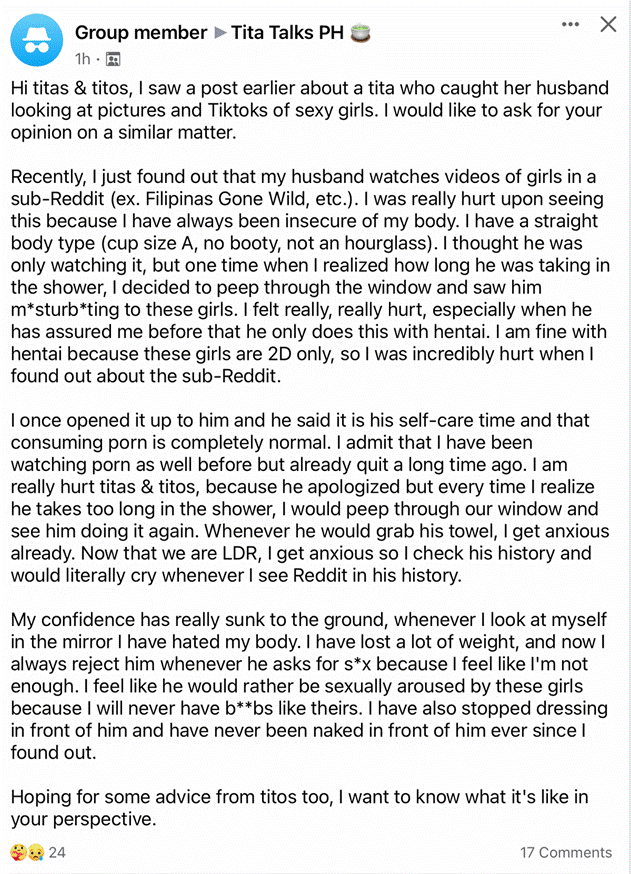
Fig. 3. Group member of Tita Talks PH. Mar. 2022, Facebook. Accessed 1 Apr. 2022.
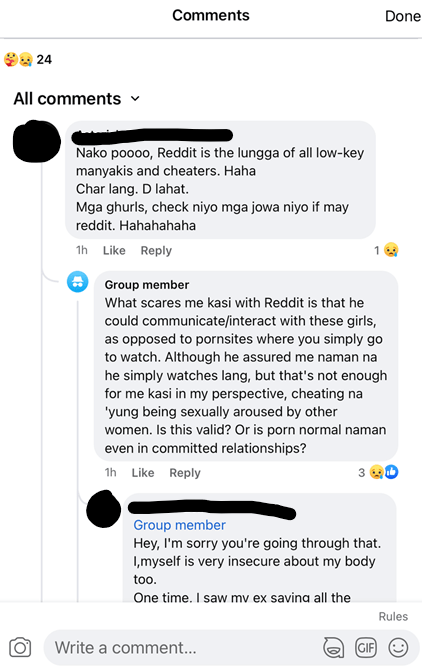
Fig. 4. Replies to Group member of Tita Talks PH. Mar. 2022, Facebook. Accessed 1 Apr. 2022.
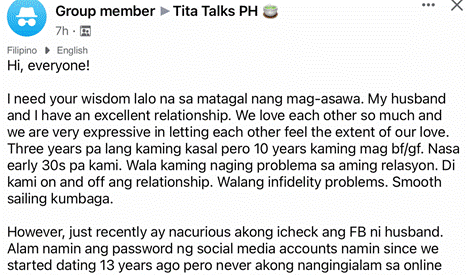
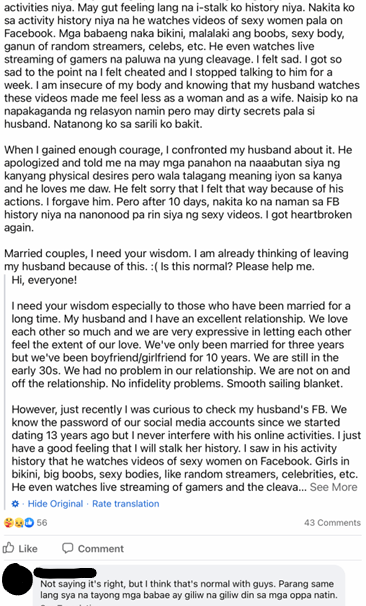
Fig. 5. Group member of Tita Talks PH. Mar. 2022, Facebook. Accessed 1 Apr. 2022.
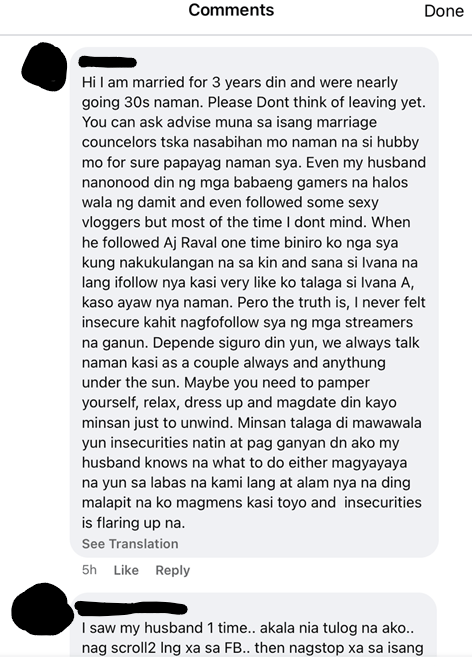
Fig. 6. Group member of Tita Talks PH. Mar. 2022, Facebook. Accessed 1 Apr. 2022.
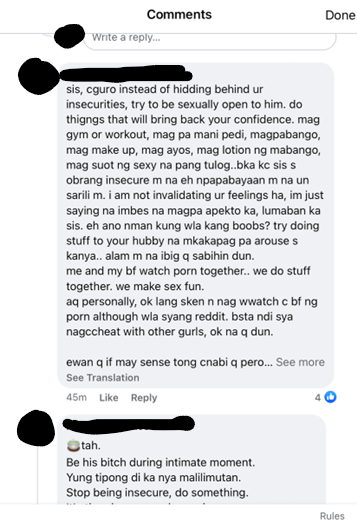
Fig. 7. Anonymous Poster 3 and 4’s response to Group member of Tita Talks PH. Mar. 2022, Facebook. Accessed 1 Apr. 2022.
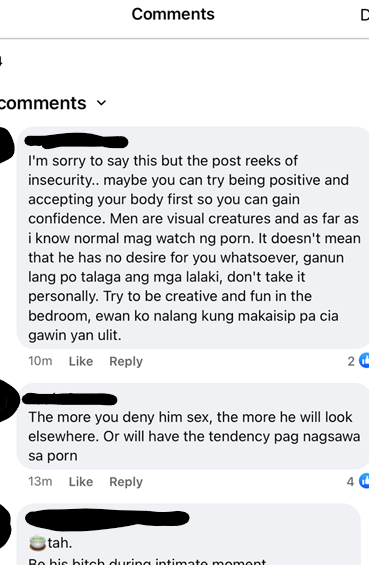
Fig. 8. Facebook replies to anonymous Group member of Tita Talks PH. Mar. 2022, Facebook. Accessed 1 Apr. 2022.
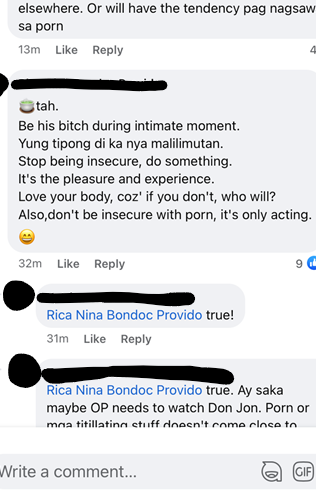
Fig. 9. Replies to Group member of Tita Talks PH. Mar. 2022, Facebook. Accessed 1 Apr. 2022.
A trend: “maybe” suggestions that only mask the true problems. A relationship problem is outlined by the poster, and people who do not know better try to make the poster feel as if it is not really a problem that is serious, and that this problem can be solved by some individual measures taken to buttress the failures of the other party in the relationship (see fig. 7, fig. 8, and fig. 9). Moreover, that these individuals have no knowledge of the systemic nature of their problem, that this is only a woman’s problem that can be solved through some teeth-gritting and self-care, and more consideration for their partner’s habits which they do not see as unhealthy, but which make them feel uncomfortable, and which their husbands or partners do not see as something harmful to their partners feelings or relationship (see fig. 3) and which they excuse with the reasoning that porn is emotionally (or, for the sake of argument, instinctively, primitively, and hence, unquestionably) meaningless to them (as if women do not get upset when men physically engage with another woman on or off-screen; the women’s version of emasculation), is an abject injustice.
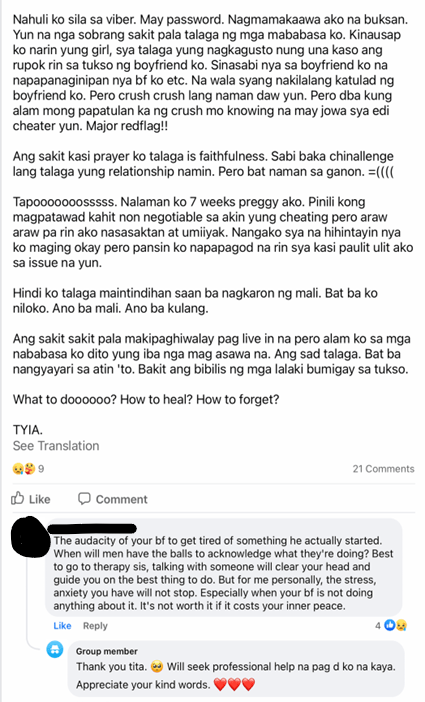
Fig. 10. Group member of Tita Talks PH. Mar. 2022, Facebook. Accessed 1 Apr. 2022.
To start, why do women not question why it makes them uncomfortable in the first place, and if they do, why do they end up capitulating to comments that affirm that they are insecure or that they need to accept their partner’s habits? Where is the voice of reason who can give them enough insight into their partner’s eye-wandering and compulsive pornography viewing? The question, “Bakit ang bibilis ng mga lalaki bumigay sa tukso” or “Why are guys so easily and readily tempted?” only shows up in a non-porn infidelity post (fig. 10). Conversely, the temptation to cheat on their partners with porn is rarely confronted as a temptation itself, as if its entrenched pervasiveness is not something egregious due to its virtual medium. Hence, porn is not considered cheating because it is not tactile. It is no longer a temptation to do something potentially vastly hurtful to one’s partner, but a “coffee break” (Castleman).
It is with these stories that my research project takes shape and forms its essential drive to educate and inform.
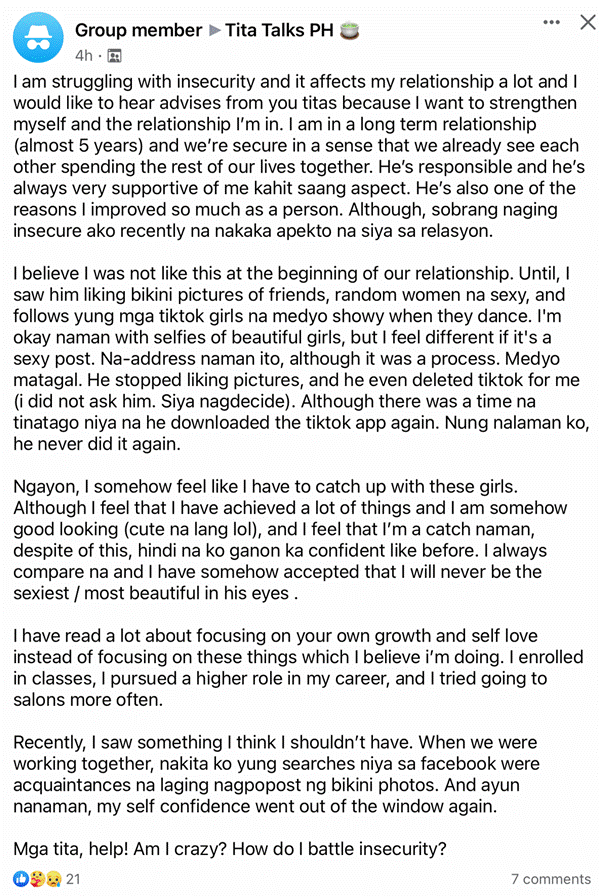
Fig. 11. Group member of Tita Talks PH. Mar. 2022, Facebook. Accessed 1 Apr. 2022.
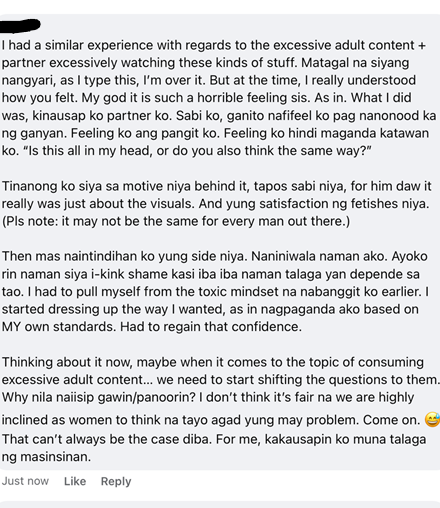
Fig. 12. Facebook replies to anonymous Group member of Tita Talks PH. Mar. 2022, Facebook. Accessed 1 Apr. 2022.
Do men have the right to view porn if their partners do not provide them with sex? Do women run the risk of losing their partners to pornography’s clutches if they keep denying their partner’s desires? Do women have to compete with pornography’s appeal and the numerous visuals provided by other girls? Do these questions make porn producers and porn consumers uncomfortable; or worse, do they not care at all, like the morally bankrupt women at the start of this essay who even encourage their men to abandon their partners? But first, why is all the blame and responsibility placed on regular women and their ability to keep their partners’ attention (not the aforementioned)? To look at this problem from another angle, like what the previous commenter suggested (see fig. 12), we can ask the men themselves. What is it about porn that almost replaces the need for real women aside from it being a superstimulus? Why do men seek out pictures, videos, or visuals that provide endless amounts of dopamine with abandon, undoubtedly regardless of their partners’ feelings about their consumption? Are men simply not interested in their partners’ feelings, and what can this say about their entitlement to sexual superstimuli? Moreover, is there an ethical limit to the amount of content men are allowed to consume even though this superstimuli has already been proven experimentally to be detrimental to a relationship’s health? Why are women not angered enough? Why are men given all these allowances to pursue pornographic content to every corner of cyberspace to their heart’s content?
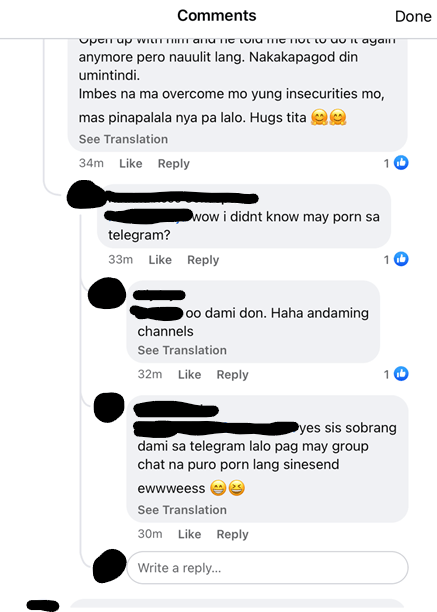
Fig. 13. Replies to Group member of Tita Talks PH. Mar. 2022, Facebook. Accessed 1 Apr. 2022.
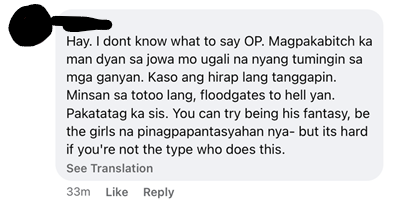
Fig. 14. Response to Group member of Tita Talks PH. Mar. 2022, Facebook. Accessed 1 Apr. 2022.
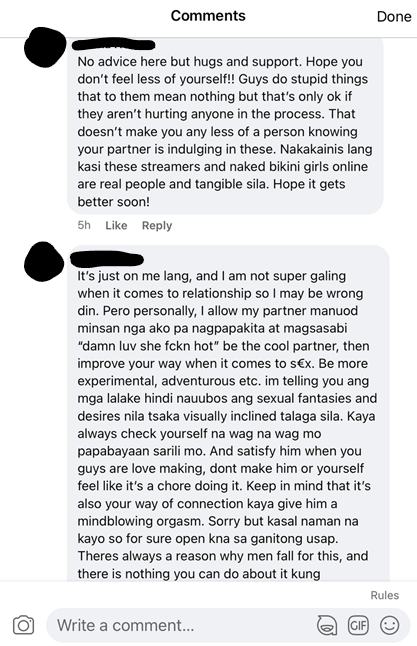
Fig. 15. Facebook replies to Tita Talks PH post. Mar. 2022, Facebook. Accessed 31 Mar. 2022.
Implicit is the idea that sex is offered and given by a woman to a man. It is not an activity that is shared co-equally between two partners who want to please each other. The man usually does not care about or know enough about pleasing his partner because the women they are with do not show the same amount of extreme enthusiasm for their penises, or gigil when it comes to sexual acts; never mind that this enthusiasm is unrealistic and usually faked for maximum addictive consumption by the viewers they produce it for. This quality of porn, on top of its already overwhelmingly addictive properties, not only feeds men the idea that desirable sex is passionately over-the-top to overblown proportions (hence, leading to discontent and despair over their real relationships), but also makes them unconsciously behave in a way that communicates to their partners that the attractive virtual woman is a far better sexual giver (though they are a random man on the internet and the pornstar is not giving it to them specifically), and that their partner, who is the actual giver of sexual attention, is not doing enough to please him or is not interested in him (thus turning him off; desire begets desire, and porn gives it in spades “first” [an illusion because of no-effort Google searches]). It is the woman’s job to be as appealing as possible, to the point of copying the aesthetics or the appeal of porn and debasing themselves just to please their man and keep them away from this other source of pleasure that will surely steal him away if she does not yield to this newfound demand for instant, perfected, fantastical pleasure at the click of a button.
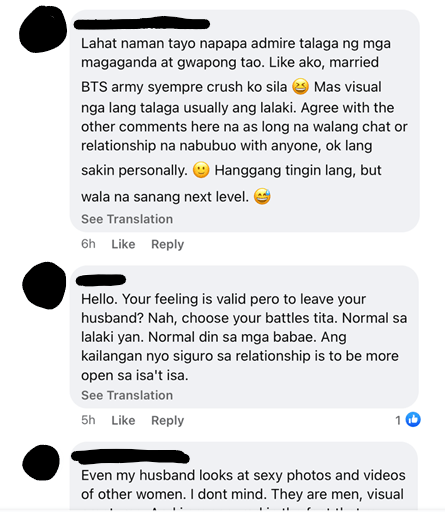
Fig. 16. Group member of Tita Talks PH. Mar. 2022, Facebook. Accessed 1 Apr. 2022.
Convenient (yet facile) siguro solutions aside, these women apparently do not know any other solution other than reluctant acceptance or assuring the poster of its normalcy, which is a fatalistic and ultimately, ruinous repression of better possibilities and options which they can develop, negotiate, and/or lobby for. For fear of retaliation, abandonment, social suicide, and all the other social costs of purveying unpopular and unpleasant ideas about their already dire realities, there is no more room for questions. No one has any knowledge of porn’s pernicious effects on not only their relationships, but also their brains, their bodies, and their ways of being and becoming as individuals and members of a society.

Fig. 17. Responses to Group member of Tita Talks PH. Mar. 2022, Facebook. Accessed 1 Apr. 2022.
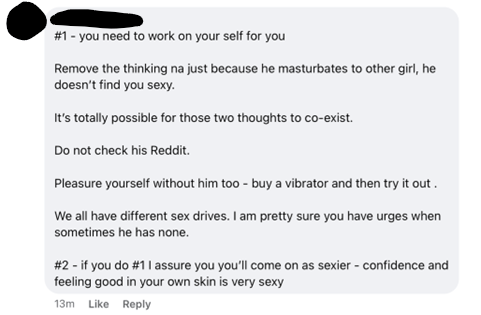
Fig. 18. Reply to Group member of Tita Talks PH. Mar. 2022, Facebook. Accessed 1 Apr. 2022.
According to one reply(see fig. 18), women have to be the ones to adjust. They have to resort to avoidance strategies and comforting thoughts (“Do not check his Reddit”; “Remove the thinking…”) that only present band-aid solutions to the discomfort caused by their partners’ pornography consumption. Further, within these women’s responses is an undertone of one-upmanship: who is more “secure” and able to make their partners happy by condoning pornography use, thereby lessening any conflict in the relationship and keeping it artificially happy (see fig. 17), normative statements that, unintentionally or not, pressure women to ignore their very real and visceral reactions against sexual infidelity, and the subsequent gaslighting or denial of their emotions, both by the porn addict/user, and the myriad of women who continue to perpetuate the idea that they are happy to oblige by allowing their partners to consume a superstimuli that is neither conducive to real intimacy, nor emotional and spiritual safety within the relationship (perhaps, because some of them do not experience as much anguish due to their privilege in their individual relative relational security—what some call “maturity”). Privacy rights become a concern because behaviors that threaten the relationship’s integrity do not warrant transparency with each other.
Not Just Insecurity
Regardless of political leanings, porn poses a real threat to society (see fig. 19). It is not harmless nor trivial. Most importantly, it is only going to get worse as technology improves (see fig. 20).
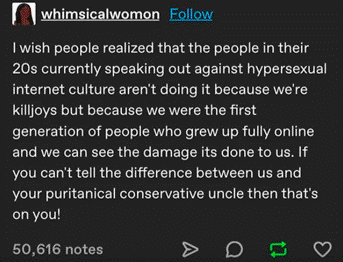
Fig. 19. whimsicalwomon. 21 Aug. 2020, Tumblr, whimsicalwomon.tumblr.com/post/626995503417147392/i-wish-people-realized-that-the-people-in-their. Accessed 4 Apr. 2022.
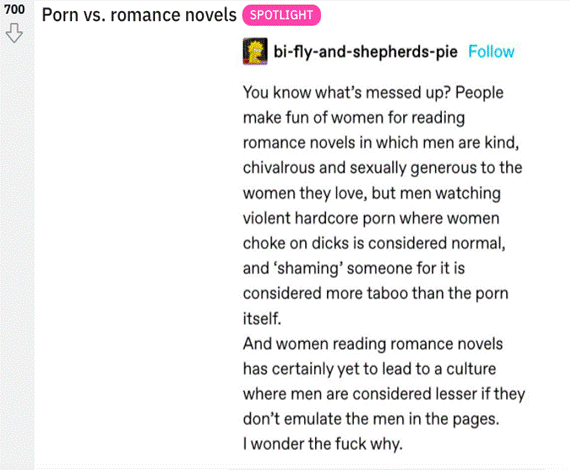
Fig. 20. Posted by u/MarineGoat. Written by bi-fly-and-shepherds-pie. “Porn vs. romance novels.” 27 May 2021, Reddit, www.reddit.com/r/PornHatesWomen/comments/nm4ul8/porn_vs_romance_novels/. Accessed 1 Apr. 2022.
An Addict’s Economy and Areas of Non-knowledge
According to Kimberly Holmes, CEO of Marriage Helper, pornography might be a symptom of something larger. That statement is foreboding as it is reassuring, in the sense that it affirms its status as an addiction that de facto disables the addict, whilst reminding us that it is potentially deadly to a society that refuses to acknowledge the damage and chaos it brings. “No one wants to study porn” (Free Medical Education), yet it is a symptom of a deep societal gulf of non-knowledge on human nature and the interplay of good and evil. Hence, it deserves all the best minds’ attention. By solving it, it would be unsurprising to find that one might be led to more discovery in different fields, just as the microwave oven was discovered by accident (Blitz).
Personal Grievances (Social Conditions)
It Starts Young
I was so young when it started: my own first stirrings of sexual awakening. It was not unwelcome and I did not feel threatened. I do not remember what age I was, but I had watched Charlie’s Angels, the scene where the three angels went undercover as strippers. Maybe it was the transgressive nature of it; I had been raised Christian, and I knew already that what I saw was not for my kind. Or maybe it was their movements and costumes, that they could move so sensually to the suggestive music—and these had been alien concepts beforehand. I had no framework or frame of reference to understand what had happened, but I knew I wanted more of it. I wanted to be them. They were women, agents, who had power, and along with this power, a new, sexual dimension. They could control men’s minds and distract them. And of course, there was the eroticism, the sensuality in how their bodies moved and their faces looked as they communicated with their desired audience.
I was nine or ten, when I watched High School Musical with my peers. The Filipina lead actress, Vanessa Hudgens, had been embroiled in a scandal: somebody leaked her nude photos. I saw these photos out of curiosity, experiencing confusion: was I attracted to this because I was bisexual, or was it because she was transgressive? In the movie, she is portrayed as this innocent nerdy math whiz, someone whom I could relate to, and aspired to be: she catches the eye of Zac Efron’s character, Troy Bolton, who is the high school heartthrob. When the pictures got out, I felt vicarious pleasure: as if I was her and had taken gorgeous pictures of my nude or semi-nude body for a boyfriend in real life (who was also Zac Efron).
This was just the beginning of my virtual sexuality taking shape. I did not consider myself, that is, my real self, a sexual being, when I was young. I did not look like a girl and had looked more like my dad, and being in a girl’s body did not help. I did not dress in girly clothes and was content with gender-neutral clothing. My sister was the real girl, because she looked like my beautiful mom. So I buried that part of myself and was content with a fantasy. I had busied myself with schoolwork until I reached college when I rediscovered hardcore pornography and became addicted to it, or at least, dependent on it for some kind of virtual release, to the detriment of my mental health and my grades (I had once discovered it through Tumblr and Reddit gifs in high school but it did not seriously affect me yet). I could not obtain sexual relationships with others, so I filled that need by transplanting my agency onto a beautiful pornstar who could experience pleasure, someone who deserves it because she is beautiful. I had no awareness of this dangerous underlying logic until the age of twenty-four, when I finally confronted myself about my sexuality. Now, I consider myself nominally bisexual because for whatever reason, my Christian background, poor self-esteem, childhood experiences with porn, porn addiction as a way to salve my shattered self-worth, and a couple of other mental illnesses have all converged to develop a kind of sexuality that results in heterosexual attraction in real life, and erotic fixation towards the same sex when it comes to the realm of bodies and sensual movements in the virtual space, or in porn. I would even go so far to say that this is a porn-specific sexuality and orientation, because I do not experience attraction, sexual or romantic, to women in real life. However, I look at the woman in porn because I see myself as her.
Naturally, I am not alone.
TOPICAL LITERATURE REVIEW: THERE MUST BE MORE OF YOU OUT THERE!
I. RESEARCH QUESTION:
How can fictional short stories with a revenge plot and woman-on-woman rage act as alternative interventions that may help victims of porn’s soft and hidden violence through catharsis?
II. LITERATURE REVIEW:
All that said in my introduction, porn is still a sensitive subject, especially if it crosses into addiction and boundary-breaking. In my survey of anonymous confessions and the online discourse of women who struggle with their partners’ porn addictions, I have often found myself sifting for hidden sentiments, noticing all the ways women carry a subjective and indescribable pain that cannot simply be brushed away as insecurity or betrayal trauma (BT), and can only be glimpsed in the gaps between what they reveal in self-disclosure, most notably in expressions of guilt and contradiction that they know they “shouldn’t hate women, but [they] do” (mgKoishi).
In my own experience, which was mostly a parasocial attachment to a person who used porn, and which led to a “crazy-making” mental illness, I could only wonder at the violent reality of women who were actually in relationships with men who routinely spent their finite time on these fantastical women with impossible proportions and infinite addictive enthusiasm. In a zero-sum game where attention is hijacked and stolen using pleasure with little to no friction, these wronged women have no outlet but themselves and the internet’s advice to try new beauty routines in a self-help bid to take care of themselves and regain lost value, which did nothing to placate my anger if only because I have come to believe porn is one of the worst inventions that allows men to glimpse paradise on tap, and how could reasonable people still believe the hell and boredom of reality could hold a candle, much less try to compete, with the amorality, perfection, and rationalization of unnatural and unattainable beauty that is contradictorily hyper-accessible and commonplace, and which inclines people toward unrealistic body- and performance-related expectations (Goldsmith et al.)?
But I have come to believe that if women are not beholden to fellow women by not going into the porn industry while they offload their qualms about indirectly stealing masses of men’s time and sexual energy away (because they are not directly having sex with them and the perception of their greed for mass attention is blunted), then women who are emasculated by porn actors—and strangely, no one has coined a female equivalent of this—are not beholden to contain or suppress that hatred within themselves and wonder in agony about how they fail to measure up, or enter obsessive spirals of jealousy and turmoil, but whose lived-in realities are so opaque that the word “spiraling” does nothing to concretize the trauma aside from images of women breaking down crying and screaming (DaisysDelights). Justice, poetic or otherwise, is non-existent, and there are real consequences that do not seem to matter enough. In a qualitative descriptive phenomenological investigation aimed to examine female partners’ lived experiences and well-being after the discovery or disclosure of their male partners’ Sexual Addiction/Compulsive Sexual Behavior, Fakri Seyed Aghamiri et al. found that self-hatred, self-esteem and body image issues, trauma responses such as hypervigilance, and suicidal thoughts and acts, among others, are acceptable risks men take when they compulsively watch porn against their partners’ wishes, rewarding their sexual urges with zero work required, training their habits over time and eroding the ability to be present for people they are supposedly committed to.
But then, women are not evil enough. At my lowest point, I predictably hated slutty and sensual women but this hatred had virtually no outlet (and nothing I did could reduce my perception of the vaunted value of my rivals in the eyes of someone I wanted), wasting my time and warping my priorities. If men had porn to imagine what it would be like to attain women they cannot get with in real life, then it seemed to me that what is left now is to make the soft violence urgent and palpable, that is, by virtually showing how this inner rage manifests in woman-on-woman violence, which springs from my cathartic experience of watching Mocha Uson being dragged by the hair by Angel Locsin in Four Sisters and a Wedding, her adulterous act igniting a tension that simply cannot be dealt with in a civil way. Truth be told, violent reactions against enablers of adultery, whether facilitated by porn or not, are even viewed negatively because psychological or soft violence is not seen as severe as physical assault or kidnapping, when this particularly persuasive form arguably steals something more important than money, or equivalent to money (time, energy, love, vitality), and which causes untold damage that current psychological interventions are not quite redressing or neglecting (Seyed Aghamiri et al.).
Thus, for many traumatized people, fiction can be a cathartic relief valve for female rage and may even prevent real deaths, not like what happened in Arkansas when Patricia Hill, then sixty-nine, shot and killed her husband because he resubscribed to porn she tried to cancel and did not listen to her warnings to stop, and who, according to her lawyer, “lost her mind,” hinting only sparely at the aftermath: “She didn’t try to hide it. She told the truth (about what happened)” (Varandani). Instead of asking if fictional depictions of violence will normalize real violence against women and promote divisiveness, I came to the conclusion that women should be allowed to imagine their own revenge plots, where they get to regain their dignity amidst the system that has created their replacements, people whose culture they are justifiably against encouraging, and where they get to believe that there is nothing abnormal about this abnormal state of affairs that states they have to safely discharge the soft violence that is perpetrated against them by people who are ‘not responsible’ for their partners’ addictions, people who have unchecked privilege because of the body’s nature and frailty, without removing agency from partners who fall into maladaptive patterns because of their vulnerability to technology that has outgunned their willpower. In reclaiming and re-examining what it takes to be an “evil” woman in fiction, Megan Barnard writes about “giving [women] the chance to move from evil into the gray, where men have existed for so long,” and arguably, the porn industry and performers as well, who continually rely on pleasure to bypass critical thought and accountability.
In this vein, one relevant outgrowth of the internet’s propensity to magnify polarizing or controversial characters is the “I Support Women’s Wrongs” trend, a constellation of fictional depictions about morally grey or pitch-black female protagonists and challenging themes. The women populating these stories are defiant, unhinged, or “monstrous,” and subvert traditional norms through their actions, which span from morally questionable to outright malicious, and they often resemble antagonists or villains (farosociety). “I Support Women’s Wrongs” is also a popular, user-generated category on sites like Goodreads and has birthed a social media trend in various genres from contemporary fiction to fantasy and thrillers (shinjinic). Since porn is sex work, and it is the “oldest profession” that has produced this particularly predatory and bottomless craving, there is no putting the genie back in the bottle, no matter how much women clamor for equality in the arena of sexual politics. There is only coping with the betrayal, whether through wish-fulfillment “women’s wrongs” fiction (which is arguably less self-destructive or expensive than plastic surgery), or the social value of increased awareness of women’s suffering, especially when moral imagination is lacking or underdeveloped when it comes to fiction tackling this theme or topic.
In my survey of various literature, I have come upon relevant bodies of scholarship at the intersection of how porn use is apprehended in the Philippines and globally; revenge plots and the “I Support Women’s Wrongs” trend as tools to stage catharsis, safely discharge violence, and explore consequences; and Fiction-Based Research as a methodological framework to craft stories that resonate with women whose partners have neglected them because of porn, and who live with the constant tension of being in denial about their hatred for porn stars, who are a more natural target for their anger—and to an extent, the direct causative agent who these rejected women have no love for or relationship with—relative to their errant partner who they feel has been stolen from them, which is at odds with the dominant or normative view that the responsibility lies only with the porn addict.
But seeing as women keep posting on the internet to no avail or relief, trying to understand their partners’ problem through an individual or clinical lens (peckaboo) without addressing that their discontent may source in suppressing justified anger or hatred, in my review, I open with the question: how can fictional short stories with a revenge plot and woman-on-woman rage act as alternative interventions that may help victims of porn’s soft and oft-hidden violence through catharsis? I classify and compare the literature by grouping them according to how seriously they consider the inner trauma of a woman in this situation e.g. whether their sentiment or approach is the subtle denial of porn addiction’s ubiquity or existence, that it doesn’t compete with real sex, or their perspective only ends with advice about tackling communication in the relationship (and not the actual causes); by reading through the subtext of women who have posted anonymously online in droves (but never finding relief and disappearing), repeated gaslighting, the violent inner tensions surfaced by the rationalization, denial, and putting the burden on women to compete and shore up their self-esteem or dignity or keeping their resulting misogyny in check without accountability or reparation on the part of the porn industry; and finally, looking at fictional representations of morally-grey women who take all of these subtexts, channel their dissatisfaction, sense of injustice, rage, betrayal, and the subtle or not-so-subtle invalidation of others, and choose to do at least one violent thing: speaking truth to power, piercing through the layers of denial and rationalization, or dismantling how an intrasexual rival’s power works so they can regain some form of control over their rightful relationships or security.
In 2024, the Philippines ranked 3rd in the top countries who visited Pornhub’s website, with the United States and France coming in 1st and 2nd, respectively (Pornhub.com), a statistic that belies just how embedded dependence and infidelity through porn use are in contemporary life. As for the Philippine pop cultural context, in what has become an internet meme in the early 2020s, Jodi Sta. Maria delivers what is now considered an iconic but hilarious line remixed with perfect timing to the beats of the electro house hit “Satisfaction”: “Your daughter…is sleeping with my husband” (Advincula), the force of the drama of its prangkahan diluted through the unseriousness of internet culture. Meanwhile, Maricar Reyes as the kabit and Angelica Panganiban as the wife in The Unmarried Wife indirectly talk about the sexual violence of her husband’s infidelity by likening it to their context—meeting at a restaurant—an attempt to circle around the topic without outright violence in a public place. But Reyes’s character proves an effective villain by stating, “Your husband keeps coming back here because you starve him at home,” continuing with a series of rage-bait comments that were seemingly written to provoke the audience by exposing a kabit’s thought process, as well as her repulsive-but-compelling delight at stealing and enjoying her spoils as well as rubbing it in for the wife to witness (ABS-CBN Film Productions Inc. (Star Cinema)).
Adultery in Filipino media has always sustained tension through the expectation of some form of confrontation, which releases some of it into Tzvetan Todorov’s narrative theory of “new equilibrium” by having the traumatized woman get the last word with the kabit. Yet it is not the same for those who have partners who use porn, those who are regularly exposed to the visual intimacy and vaunted beauty of porn, and who often try to release this tension by consulting psychologists, therapists, or other people in the same boat online or offline.
One such woman is Alma, who asks a question to Rappler’s Life and Style column by couple Jeremy Baer and clinical psychologist Dr. Margarita Holmes: “Need your advice regarding my boyfriend for 6 years. We are currently living together and having our second child. From the start of our relationship, I already caught him hiding porn videos in his laptop. I thought it was just a phase but I caught him a lot of times downloading porn videos on his iPad and even in his phone up to this day. I always feel depressed that he prefers watching porn rather than having sex with me. Is he a porn addict?” seemingly not to find the truth about whether he is robbed of agency by being diagnosed as an out-of-control addict, but a solution to the betrayal in lieu of direct confrontation with the porn stars, who have safely tucked away their reservations about directly stealing someone’s partner because they do not see the consequences beyond the screen, or prefer to be blind to the consequences of their actions.
While Dr. Holmes presents a well-informed clinical perspective of addiction including its evidence-based manifestations in cognitive, psychological, and behavioral contexts, she ends her advice with recommendations about talking it out with the boyfriend to relay her feelings of betrayal, instead of accusations of addiction, and if he doesn’t seem to care (which is likely the case like many heavy porn users), then it would be best to separate, which does nothing at all to relieve her deepest desire to regain her husband’s attention and security or offload some of the inner violence, rage, and turmoil. On the other hand, Dr. Holmes’s husband Jeremy denies outright that porn competes with the desire for real or marital sex by comparing it to eating cabbages and carrots, where eating one excessively (never mind that they are equally unappealing, unlike the endless appeal of perfect porn stars compared to ordinary women) will deplete the hunger for the other, which is a failure of imagination and a direct reflection of the deep-seated denial in some men who think that it is “not necessarily” a zero-sum game, and how they do not realize it is not often just about the act or the feeling of being betrayed, but the intractable existential crisis and inner violence triggered by the loss of one’s emotional safety and security, often unmooring women from respectable and sane emotions and plunging them into functional, occupational, or interpersonal impairment no matter how hard they try to be stoic (DaisyDelights).
Soft violence pervades every woman’s experience and emotional truths, and in this sense, it is not only because the online content and behavior is exploitative, which shows the extent of the views at the time in 2015 by gender advocates in the Philippines (Garcia). Pierre Bourdieu gives a definition of symbolic violence as a “soft form of coercion that manages to impose new social meanings, and these new meanings are legitimated as the power relations underneath the process are hidden” (Bordieu qtd. in Piquard), where the power relations, in the case of porn, are shrouded and lubricated by the hedonic value that it provides for people, people who are proven to react badly through the mechanism of reactance, or the hostility to rules, restrictions, regulations, and people who attempt to keep their natural nature or freedom in check (Garg).
Another definition from Bordieu in UNFPA in the gender domain highlights the power of symbols to “impose, devastate, attack, suppress, and distort” ways of seeing, thinking, talking, and being, which include the metaphors or the way we conceptualize the effects of porn in order to reinforce dominant views and assumptions, most notably around just how much control we have on individual nature being optimized towards intended behaviors by well-funded technologies. Paid creator platforms like OnlyFans netted $6.3 billion in gross revenues in 2024, up from $300 million five years earlier (Ball). In August 2025, L’Oréal hired Ari Kytsya, an OnlyFans star, to market makeup popular with teenagers, seemingly unfazed by campaigners who warned against glamorizing it, knowing that it is best for the bottom line to build brand loyalty early (Gentleman and Maheswaran). Farhad Divecha, CEO of a digital marketing agency interviewed in the article, describes how “today’s society is much more accepting of advertising like this than it might have been five or 10 years ago. Brands want eyeballs. As a marketer, I see untapped potential in those sites…It might not hurt Urban Decay if the controversy provokes extra visibility.”
In other words, there is a massive and steadily encroaching movement that seeks to use porn or its associated agents as a shortcut to huge profits, with no thought as to the consequences on women’s feelings, behaviors, and rights, because it is the fastest, most primal way to persuasion (Pauline), and because marketers know that women want to emulate, not necessarily the behaviors, but the unquestioned appeal of porn stars on men everywhere so they become as desirable or valuable (Kippist).
Women, from the moment they are born, are subject to gendered expectations arising from the symbolic or soft violence imposed on them, for example, the expectation of being non-confrontational and meek to maintain an image of the demure feminine that is considered ideal and attractive. Expectations around emotions (which emotions must be produced, felt, suppressed, and when) are referred to as “feeling rules” (Hochschild et al. cited in Ortiz). Women in professional roles are conditioned to suppress anger, which limits the expression or development of structural critiques of the conditions that provoke that anger, though “white women have more leeway in the expression of anger than women and men of color” (Bellas et al. cited in Ortiz). In her study of how women behave in online spaces amidst a partner’s porn addiction, Stephanie M. Ortiz found that online spaces like subreddits such as r/supportforpartners provide a breather from feeling rules around appropriate reactions such as forgiveness, which she notes are feelings standing in the way of discussions of the social implications of porn addiction on women. In these spaces moderated by people who forbid the minimization or sanctioning of emotions, rage and sadness are given space and validated, and I argue that it not only helps in the discussions of the broader impact porn has on women, but also reflects the need for more channels where women can actually talk back, at least virtually, to their oppressors and at least try to persuade them in a way they can interpret (the language of soft violence), instead of being validated in an echo chamber of people who are already convinced or have personal experiences with this specific trauma. In my own experience, this tends to become hollow as none of my concerns were heard by people whose behavior I wanted to change or whose excessive power I wanted to dismantle.
But this is where fictional representations have their strength, where writers and women can explore uncomfortable and violent reactions natural to a world that seeks to violate their emotional safety and security with no conceivable limits. In exploring the revenge plot, “evil” women, and the craft of catharsis through short stories, I analyze Isabel J. Kim’s 2025 science fiction story, “Wire Mother” in Clarkesworld 229, following a teenager named Cassidy Janet Glass whose father cohabits with AMY, a digital version of her real mother, and who gratifies his sexual urges by hiring Rina, a Manual Interface who connects to AMY through a brain implant so she can control her speech and body. Cassidy has a “not-diagnosis” of Emotional Contagion Disorder which prevents her from connecting, consuming, or empathizing with digital companions (who are accepted as “sentient”) and “semi-sents” like the dominant culture around her, which can be read as a stand-in for the virtual representations of perfect companions who perform sex and pleasure as a part of their profit scheme and programming, instead of really connecting with a partner. When Cassie nearly gets raped by Oliver, someone she thought was her friend, someone she thought attractive and would never harm or abuse even a “semi-sent,” when he admits that he has been ignoring them saying “stop” when he uses them because he assumes they have no feelings like Cassie (because of her ECD), she storms out of his house and ruminates about how normalized it is, how digital people and semi-sents pervade every aspect of her life through the mechanism of Manual Interfaces.
Which brings us to Rina, her dad’s Manual Interface. She comes home and finds “Rina’s hair is disheveled, and her lipstick is a little smeary at the edges.” Then comes the moment Rina nonchalantly lets her know her parents have been fucking through her body:
“Your parents are showering. Are you okay?”
Cassie doesn’t want to tell anything to Rina. She’s angry that Rina isn’t someone she can talk to, that Rina rents her body out to pretend to be her mother. She wants Rina to be someone she can talk to. She wants Rina to be older, to have been the mother Cassie could have talked to.
“Do you like getting screwed by my dad?”
Rina puts her cup down. She lowers the heat on the stove. She turns around.
“It’s nice, getting to help your mom out,” Rina says, evenly. “Do you want me to get her for you? Being insulted isn’t in my contract.” (Kim)
All throughout the story, Cassie is hemmed in by the soft violence of feeling rules that expect her to be nice to Rina, connect with AMY, and adjust to a world with digital people and semi-sents, but being nearly raped catalyzes with her frustrations stemming from the larger problem enabling Oliver’s behavior, and she chooses to release some of this tension by speaking truth to power, to Rina and the hegemony backing her, piercing through layers of denial and rationalization. In this case, her execution of prangkahan seeks to assert power by shaming the behavior that is justifiably damaging to her, only, Rina responds with some bite of her own, igniting more inner rage and violence in Cassie.
After her encounter with Rina, AMY tries to be helpful, but Cassie realizes she will never be able to see her perspective, just like Rina, whose rationalizations prevent her from truly empathizing with Cassie, the daughter of her (dead/replaced) intrasexual rival, and just like Bree Olson, the porn star, who feels bad for being “humiliated and disrespected” but thinks she is hated unfairly, never once questioning her behavior and minding the effects of her actions as it affects women she has decided are collateral damage. Cassie doesn’t believe AMY will ever be able to understand her, wishing and imagining a better life where she is not forced to pretend everything is fine with the existence of digital people and Manual Interfaces. Luckily, Oliver had earlier given her a kill code, and she detonates it by speaking it in the air, “deleting her mother from every single one of her father’s servers,” becoming more “evil” than Oliver because she has also decided to see through their illusions of humanity (in order stop the entire enterprise as it affects her), releasing the simmering tension and providing a cathartic ending that according to author Jill Baguchinsky leaves the reader satisfied, and she puts it best when she says it should have the same effect for the writer: “There’s nothing quite as delicious as gathering one’s latent anger and rage and disgust and weaving it all into the kind of consequences we don’t always see enough of in reality. Dig it up and set it free—the most effective revenge stories tend to contain at least a grain of truth and lived experience.” Since there is no foreseeable karma or reckoning in sight, writers and readers alike must turn to fiction to deal with the world that has totally been destroyed even before they could be conceived.
Finally, in every research, there are limitations. Surveying accounts from online sources without a strictly hateful sentiment (as opposed to rhetoric only and not to be taken literally) may be seen as one, but the popularity of “I Support Women’s Wrongs” trend/genre shows potential and support for the claim that women are not only angry at patriarchy as a whole, but also struggling with their feelings around women who fulfill patriarchy’s astronomical standards and pressures made palpable and more urgent than their own well-being (Kippist, Gentleman and Kaheswaran). As well as that, the Philippines is lauded as the third top pornography-viewing country in 2024 (Pornhub). There is a good cause to believe that the Philippines ought not to be ignored when it comes to qualitative or empirical research in this area. Moreover, the literature mostly focuses on the clinical impact and its conceptualization as an addiction or compulsion, which Ortiz has found through Madita Oeming’s study actually “carefully avoids alienating the consumer and avoids critically examining pornography itself,” while female partners and their experiences are underrepresented (Seyed Aghamiri et al.), or only center advice between having to live with it, flawed conceptualizations or metaphors, or communicating concern in order to mend the relationship (Baer and Holmes), and do not contain steps toward actually empowering women. Like Seyed Aghamiri et al.’s study, I did not consider the perspective of men affected by the porn consumption of their partners, nor did the research find more representative short stories from the Philippines tackling this topic or theme, potentially excluding other perspectives, which is a ripe area for more research.
This literature review is hopefully a first step toward speaking to the variegated lived experiences and well-being of female partners of compulsive porn users, in all their complexity and nuance. In contributing to the intersection of Sexual Addiction/Compulsive Sexual Behavior, trauma therapy, and how women may grapple with the structural injustice flowing through a specific type of people working in porn who have become their de facto intrasexual competition with excess power, I add a new perspective to the understanding of the gamut of consequences that porn may have on women’s moral development, specifically addressing the internalized misogyny and resultant inner violence that may need better venues for expression and affirmation, where they get to exercise prangkahan whether in fiction or in real life in order to become empowered through catharsis, discharging some of that rage, and assert their rights which have been encroached.
The women in this literature review come from all backgrounds, but despite their individual and relational differences, their lived experiences contain unverbalized sentiments that may be sourced in suppressed female rage, and in the analysis of the short story by Kim, I show how this rage is given space and released through cathartic dialogue and plot, with the protagonist speaking truth to power, bursting through the rationalizations and denials, and even dismantling the main mechanism (AMY) by which she is being tormented.
When it comes to the effects of porn addiction, healing may never come in the way one expects, and if in the end they shatter you, make them pay for it and bring them down with you.
Works Cited
“2024 Year in Review – Pornhub Insights.” Pornhub, 5 Dec. 2024, https://www.pornhub.com/insights/2024-year-in-review.
Advincula, Lance Romae. “‘Your Daughter Is Sleeping With My Husband’ remix, aprub kay Jodi Sta. Maria.” Balita, 27 Apr. 2022, https://balita.mb.com.ph/2022/04/27/your-daughter-is-sleeping-with-my-husband-remix-aprub-kay-jodi-sta-maria/.
Baer, Jeremy, and Margarita Holmes. “[Two Pronged] Is My Boyfriend a Porn Addict?” Rappler, 28 Aug. 2016, https://www.rappler.com/life-and-style/relationships/144457-two-pronged-boyfriend-porn-addict/.
Baguchinsky, Jill. “Revenge in Print: On Crafting Revenge Stories in Fiction.” Writer’s Digest, 24 July 2024, https://www.writersdigest.com/write-better-fiction/revenge-in-print-on-crafting-revenge-stories-in-fiction.
Ball, Matthew. “Breaking Down OnlyFans’ Stunning Economics.” MatthewBall.Co, https://www.matthewball.co/all/ofpl.
Barnard, Megan. “Why the Rise of Morally Gray Women In Fiction Is Good For All of Us.” Literary Hub, 30 Aug. 2023, https://lithub.com/why-the-rise-of-morally-gray-women-in-fiction-is-good-for-all-of-us/.
DaisysDelights. “My self-esteem has been completely ruined by my partner’s porn addiction.” Reddit Post. R/Offmychest, 16 Mar. 2024, https://www.reddit.com/r/offmychest/comments/1bgcrmm/my_selfesteem_has_been_completely_ruined_by_my/.
farosociety. “We Support Women’s Rights, but More Importantly, We Support Women’s Wrongs…” Instagram, 19 Mar. 2025, https://www.instagram.com/farosociety/p/DHY_rPEyspM/.
Garcia, Lisa. “Sexuality, Sexual Rights and the Internet in the Philippines.” Global Information Society Watch, 2015, https://www.giswatch.org/en/country-report/sexual-rights/philippines#sdfootnote31sym.
Garg, Disha. “The Decision Lab – Behavioral Science, Applied.” The Decision Lab, https://thedecisionlab.com/reference-guide/psychology/reactance-theory.
Gentleman, Amelia, and Saranka Maheswaran. “L’Oréal Hires OnlyFans Star to Market Makeup Popular with Teenagers.” The Guardian, 9 Aug. 2025. Society. The Guardian, https://www.theguardian.com/fashion/2025/aug/09/loreal-hires-onlyfans-star-to-market-makeup-popular-with-teenagers.
Goldsmith, Kaitlyn, et al. “Pornography Consumption and Its Association with Sexual Concerns and Expectations among Young Men and Women.” The Canadian Journal of Human Sexuality, vol. 26, no. 2, Aug. 2017, pp. 151–62. utppublishing.com (Atypon), https://doi.org/10.3138/cjhs.262-a2.
Kim, Isabel J. “Wire Mother.” Clarkesworld Magazine, https://clarkesworldmagazine.com/kim_10_25/.
Kippist, Lucy. Teen Girls Want ‘Porn Star Look.’ https://www.news.com.au/lifestyle/parenting/teenage-girls-pressured-to-look-like-porn-stars/news-story/f05c7dfcdf6f1c615ff326b2d6ba075f.
mgKoishi. “i hate women because of porn.” Reddit Post. R/Vent, 17 Oct. 2024, https://www.reddit.com/r/Vent/comments/1g60jpb/i_hate_women_because_of_porn/.
Oeming, Madita. “A New Diagnosis for Old Fears? Pathologizing Porn in Contemporary US Discourse.” Porn Studies, vol. 5, no. 2, Apr. 2018, pp. 213–16. tandfonline.com (Atypon), https://doi.org/10.1080/23268743.2018.1434170.
Ortiz, Stephanie M. “Women Partners, Feeling Rules, and the Gendered Consequences of Porn Addiction.” Sexuality & Culture, vol. 28, no. 2, Apr. 2024, pp. 673–91. Springer Link, https://doi.org/10.1007/s12119-023-10139-2.
Pareek, Shabdita. “‘Porn Didn’t Hurt Me. The Way Society Treats Me For Having Done It, Does.’” ScoopWhoop, 25 Mar. 2016, https://www.scoopwhoop.com/entertainment/bree-olson-former-pornstar-candid-interview/.
peckaboo. “Suicidal Thoughts Due to Husband’s Porn Addiction.” Christian Forums, 22 Jan. 2012, https://www.christianforums.com/threads/suicidal-thoughts-due-to-husbands-porn-addiction.7626331/.
Piquard, Brigitte. “From Symbolic Violence to Symbolic Reparation. Strengthening Resilience and Reparation in Conflict-Affected Areas through Place-(Re)Making. Examples from the West Bank and Colombia.” DEARQ – Revista de Arquitectura / Journal of Architecture, no. 18, 2016, pp. 68–79.
“Sex Sells: A Look Into The Porn Industry.” Business & Arts, 3 Jan. 2022, https://businessandarts.net/blog/sex-sells.
Seyed Aghamiri, Fakri, et al. “The Lived Experiences and Well-Being of Female Partners Following Discovery or Disclosure of Their Male Partner’s Compulsive Sexual Behaviours: An Australian Phenomenological Study.” Sexuality Research and Social Policy, vol. 22, no. 3, Sept. 2025, pp. 1339–66. Springer Link, https://doi.org/10.1007/s13178-024-01043-x.
shinjinic. Supporting Women’s Rights and Women’s Wrongs | GNSE 15002 06 Gender and Sexuality in World Civilizations I. https://voices.uchicago.edu/202304gnse15002-06/2023/11/08/supporting-womens-rights-and-womens-wrongs/.
Varandani, Suman. “Woman Allegedly Killed Husband For Watching Porn.” International Business Times, 24 Apr. 2019, https://www.ibtimes.com/woman-allegedly-killed-husband-watching-porn-despite-her-warnings-2787579.
Wife vs. Kabet | Revenge Is Sweet: “The Unmarried Wife” | #MovieClip. Directed by Mario J. de los Reyes, ABS-CBN Film Productions Inc. (Star Cinema), 2023. http://www.facebook.com, https://www.facebook.com/starcinemaofficial/videos/wife-vs-kabet-revenge-is-sweet-the-unmarried-wife-movieclip/598064752329489/.
METHODOLOGICAL LITERATURE REVIEW: FICTION-BASED REVENGE PLOTS & ANALYTIC AUTOETHNOGRAPHY [TO FOLLOW]
METHODOLOGY [TO FOLLOW]
FINDINGS AND ANALYSIS [FICTION STORY FROM WRITING PROMPT BELOW TO FOLLOW]
The protagonist in my fiction short story ends up violent, suffers consequences, then somehow ignites the makings of a “solution” working in her spirit. Just like Big Hero 6 and Abigail’s father, Professor Robert Callaghan / Yokai, being arrested in the end, but his daughter ending up alive.
